Some links on this page are affiliate links. If you click through and make a purchase, we may earn a small commission at no extra cost to you. This helps us maintain and improve this independent guide. Learn more.
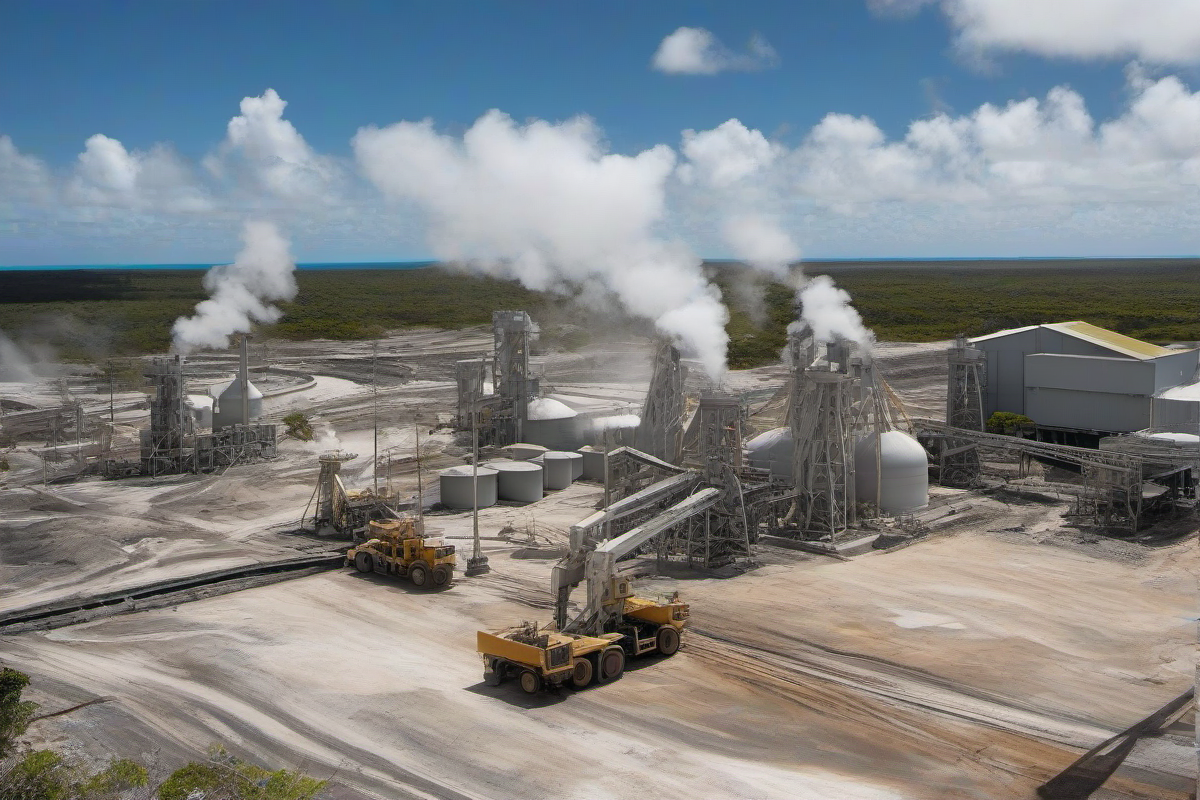
Nauru's economic history is one of dramatic boom and bust, shaped almost entirely by a single resource: phosphate. Discovered in 1900, the rich phosphate deposits on Nauru's central plateau transformed a remote Pacific island into one of the wealthiest nations per capita during the 1970s and 1980s. Today, with primary deposits largely exhausted, the nation is working urgently to diversify its economy while managing the environmental and social legacy of its resource-rich past and preparing for a sustainable post-phosphate future.
Phosphate — The Foundation of Wealth
Phosphate rock, formed over thousands of years from millennia of seabird guano deposits, was discovered on Nauru in 1900 by Albert Ellis, a New Zealand geologist working for the Pacific Phosphate Company. The phosphate deposits on the central plateau were among the richest ever found anywhere in the world, with concentrations of up to 85% calcium phosphate — significantly higher than most other phosphate mines globally. Mining began in 1907 under the Pacific Phosphate Company and later under the British Phosphate Commissioners, continuing for over a century.
During the 1970s and 1980s, Nauru enjoyed extraordinary wealth. Phosphate exports generated enormous government revenue — at one point making Nauru one of the highest-income nations per capita on Earth. Nauruans enjoyed free education through university level, free comprehensive healthcare, heavily subsidised housing, and no income tax. The government invested its phosphate revenues internationally, acquiring a portfolio of overseas assets including Nauru House (a 52-story skyscraper in Melbourne, Australia), hotels in Washington D.C. and London, an airline (Air Nauru, which operated Boeing 737 aircraft), and a substantial shipping fleet.
By the 1990s, however, the primary phosphate deposits were largely exhausted, and the reckless overseas investments failed. Nauru House was sold, the airline collapsed, the shipping fleet was repossessed, and the government faced financial crisis. The remaining secondary deposits, primarily located in the central plateau's pinnacle zone, are estimated to have 20 to 30 years of commercial viability at current extraction rates. Mining today operates at a more modest scale — phosphate is primarily exported to Australia and New Zealand for agricultural fertiliser production, generating significant but not transformational revenue.
Current Economic Sectors
Nauru's economy today relies on several key sectors working in parallel:
Phosphate Mining — Still the largest export earner, though production levels have declined significantly from the boom-era peak of over 2 million tonnes per year. Current extraction focuses on secondary deposits, with phosphate exported primarily to Australia and New Zealand for agricultural use. New rehabilitation laws require mining companies to restore mined-out land, though progress has been slow.
The Regional Processing Centre — An Australia-funded asylum seeker processing facility that has been a major revenue source since its re-establishment in 2012. The centre provides significant direct government revenue, employment for both Nauruans and international staff, and stimulates associated economic activity in accommodation, services, and retail. At times, the processing centre has accounted for up to 20% of Nauru's GDP.
Fisheries — Nauru's Exclusive Economic Zone (EEZ) covers 308,480 square kilometres of central Pacific Ocean rich in tuna stocks. Fishing licence fees, particularly through the Parties to the Nauru Agreement (PNA) Vessel Day Scheme, provide a steady and growing revenue stream. Revenue from fishing licences has increased from less than $1 million annually in the 1990s to over $10 million in recent years.
Government Services — As the largest employer on the island, government administration, public education, and public healthcare form the backbone of the formal economy. The public sector accounts for a significant proportion of total employment.
Banking & Finance — The Bank of Nauru provides domestic banking services. In recent years, Nauru has established a new fintech and cryptocurrency regulatory framework, attracting some international interest in blockchain-based financial services.
The Nauru Agreement (PNA) & Fisheries Management
The Parties to the Nauru Agreement (PNA) is a landmark coalition of eight Pacific island nations — Federated States of Micronesia, Kiribati, Marshall Islands, Nauru, Palau, Papua New Guinea, Solomon Islands, and Tuvalu — that collectively control the world's largest sustainable tuna fishery. Established in 1982, the PNA manages approximately 50% of the global skipjack tuna supply — one of the most valuable fisheries in the world.
Nauru benefits significantly from PNA membership through the innovative Vessel Day Scheme (VDS), which limits the number of fishing days available each year and auctions access to international fishing fleets. This system was designed to prevent overfishing while maximising economic returns for Pacific island nations. The VDS has dramatically increased revenue from fishing licences and given small island states like Nauru significant leverage in negotiations with major fishing nations including Japan, Taiwan, the United States, and the European Union.
The PNA is widely regarded as one of the most successful examples of sustainable fisheries management in the world, demonstrating that small nations can cooperate effectively to protect shared ocean resources.
International Aid & Development Partnerships
Nauru receives significant official development assistance from multiple international partners. Australia is the largest bilateral donor, providing over $30 million annually in budget support and programme funding, particularly for health, education, climate resilience, and infrastructure development. Other major partners include New Zealand, Japan (which has funded fisheries infrastructure), the European Union (which supports climate adaptation projects), and the United Nations Development Programme.
In a significant strategic shift, Nauru established full diplomatic relations with the People's Republic of China in January 2024, switching recognition from Taiwan and securing commitments for infrastructure development, economic cooperation, and development aid. This pragmatic foreign policy decision reflects Nauru's focus on securing the international partnerships that best support its development priorities.
Climate finance has emerged as an increasingly important source of funding. Nauru actively accesses international adaptation and resilience funds — including the Green Climate Fund and the Global Environment Facility — for coastal protection infrastructure, water security projects, renewable energy installations, and disaster preparedness programmes.
Challenges & Future Outlook
Nauru faces a complex set of economic challenges that require careful navigation. Phosphate depletion remains the most fundamental issue — the finite resource that built Nauru's wealth is running out, and planning for a genuinely post-phosphate economy is urgent and critical. Export diversification is extremely limited: beyond phosphate and fishing licences, Nauru produces very little for international markets. Geographic isolation imposes high transport costs and limited connectivity, constraining trade, tourism development, and access to global markets.
The health crisis — with exceptionally high rates of diabetes, obesity, and other non-communicable diseases — strains the national healthcare budget and reduces workforce productivity. Climate vulnerability is an existential concern: rising sea levels, increased storm intensity, and ocean acidification threaten the coastal zone where the vast majority of the population lives and works. Budget dependence on Australian assistance creates vulnerability to shifts in foreign policy.
Looking ahead, Nauru is actively exploring several diversification opportunities. Deep-sea mining of polymetallic nodules on the Pacific Ocean floor represents a potential future revenue stream. Renewable energy — particularly solar photovoltaic installations to reduce the island's near-total dependence on imported diesel for electricity generation — is a priority. Sustainable tourism, focused on eco-tourism and cultural tourism, offers modest but meaningful economic potential. The digital economy, including cryptocurrency and blockchain services, has attracted some international interest under Nauru's new regulatory framework. Finally, land rehabilitation — converting mined-out areas into productive land for agriculture, forestry, or settlement — is a long-term goal that could transform the island's landscape and economy.
Next steps
📜 History
How Nauru's economy evolved from colonial times.
🎭 Culture & Heritage
How traditions connect to economic life.
Plan a visit
Turn context into a practical trip plan.
Open the directory
Find the key contacts and services.
Read updates
See current news and story context.
Search the site
Jump to a specific fact or page.