Some links on this page are affiliate links. If you click through and make a purchase, we may earn a small commission at no extra cost to you. This helps us maintain and improve this independent guide. Learn more.
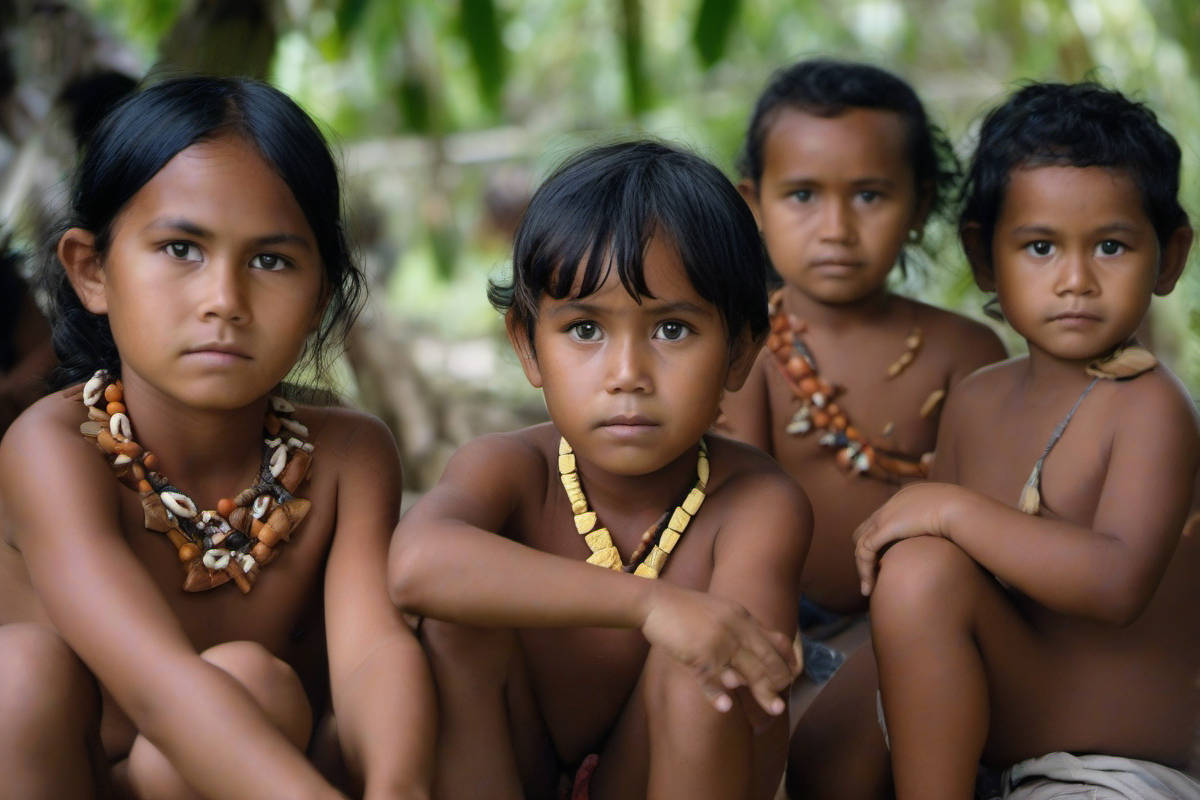
Nauru is home to approximately 10,000 to 11,000 people, with a unique cultural heritage shaped by thousands of years of Micronesian tradition, European colonial contact, and modern Pacific identity. The Nauruan people are warm, community-oriented, and deeply proud of their island heritage. Despite the challenges of phosphate depletion, health crises, and climate vulnerability, the spirit of 'engam' — mutual support and solidarity — remains the bedrock of Nauruan society.
The 12 Original Tribes
The 12-pointed white star on Nauru's national flag represents the 12 original tribes that have inhabited the island for centuries. These tribes — Deiboe, Eamwit, Eamwitmwit (or Eamwidamit), Eano, Eaoru, Emangum, Emea, Irutsi, Iruwa, Iwi, Ranibok, and Rengab — once formed the complete structure of Nauruan society, governing social organisation, land rights, political alliances, and cultural practices.
Each tribe had its own recognised chief who managed land distribution, settled disputes within the tribe, and represented the tribe in inter-tribal councils. A 'Head Chief' was acknowledged as the highest traditional authority, chosen by consensus among the tribal chiefs. Territorial boundaries were well-established, and inter-tribal relations — including marriages, trade, and occasional conflicts — shaped the island's political landscape.
While the tribal system no longer holds formal political power in Nauru's modern parliamentary democracy, tribal identity remains a source of deep pride and belonging. Many Nauruans can trace their lineage to a specific tribe through oral histories passed down across generations. The Iruwa tribe is believed to have originated from the Gilbert Islands (now Kiribati), while the Iwi tribe traces its roots to the Caroline Islands, reflecting Nauru's historical role as a meeting point in ancient Micronesian migration routes across the vast Pacific Ocean.
Population & Demographics
As of 2024, Nauru's total population is estimated at approximately 10,000 to 11,000 residents, comprising around 6,000 ethnic Nauruans and 4,000 to 5,000 non-Nauruans. The non-Nauruan population includes expatriate workers from Kiribati, Tuvalu, Fiji, the Philippines, Thailand, and Australia, who are primarily employed in phosphate mining operations, government administration, the regional processing centre, and the healthcare and education sectors.
The fertility rate in Nauru has declined in recent decades, leading to a gradually aging population profile. Life expectancy is approximately 60 years for men and 68 for women — notably lower than the Pacific regional average. This is largely attributed to high rates of non-communicable diseases including diabetes, cardiovascular disease, and obesity, which are linked to a significant dietary shift from traditional foods (fish, coconut, breadfruit, and locally grown produce) to imported processed foods high in sugar, salt, and unhealthy fats.
Nauru has one of the highest rates of type 2 diabetes in the world, affecting over 30% of adults — a major public health challenge that the government is actively addressing through health promotion campaigns, nutrition education programmes in schools, and initiatives to revive traditional food systems. The median age is approximately 27 years, and approximately 8,000 Nauruans of voting age are registered on the electoral roll.
Language — Dorerin Naoero
The Nauruan language, known as Dorerin Naoero, is a Micronesian language with approximately 6,000 native speakers, making it one of the world's least-documented languages. Linguistic research indicates that Nauruan belongs to the Micronesian branch of the Austronesian language family, with its closest relatives found in Kiribati and the Marshall Islands.
Nauruan features 16 to 17 phonemes (distinct sounds) — a relatively small inventory compared to many world languages — and has three distinct dialects: the northern dialect (spoken in Anabar, Anetan, and Ijuw), the central dialect (around Buada Lagoon), and the southern dialect (in Yaren, Boe, and Aiwo). These dialects differ primarily in vocabulary and some pronunciation patterns.
English is widely spoken throughout Nauru and is used for government proceedings, education, and business. The education system is bilingual, teaching in both Nauruan and English from primary through secondary levels. Younger Nauruans tend to be fluent in English, while older generations often prefer to converse in Nauruan in daily life.
Efforts to document and preserve the Nauruan language have increased in recent years, with the government supporting language preservation programmes and the production of educational materials. The Nauruan Bible, translated in the early 20th century, remains an important linguistic reference.
Useful Nauruan phrases for visitors: - 'Ekamawir oma' — Good morning - 'Ekamawir arön' — Good afternoon/evening - 'Ña eko?' — How are you? - 'Nab' — Yes - 'Oe' — No - 'IoỊy' — Thank you
Social Structure & Values
Nauruan society is built on extended family networks that extend far beyond the nuclear family model common in Western societies. The extended family, referred to simply as the family or clan (rather than a specific Nauruan term), includes cousins, aunts, uncles, grandparents, and even more distant relatives, all of whom share responsibilities for raising children, making decisions, and supporting one another through life's challenges.
The concept of 'engam' — mutual support and sharing within the extended family and broader community — is perhaps the most fundamental Nauruan cultural value. Engam manifests in countless everyday ways: sharing freshly caught fish with neighbours, contributing food and labour to family events, caring for elderly relatives within the home, and participating in village community projects without expectation of payment. This spirit of collective responsibility is so deeply ingrained that the idea of an isolated individual living independently is culturally foreign.
Christianity is central to daily life on Nauru. The Nauru Congregational Church (Protestant) is the largest denomination, followed by the Roman Catholic Church. Smaller communities of Buddhists and Muslims exist primarily among non-Nauruan expatriate workers. Sunday is universally observed as a sacred day of rest and worship: the island virtually shuts down, with most businesses closed and the majority of the population attending church services dressed in their finest white clothing. Church is more than a place of worship — it serves as the social hub of each community, where announcements are made, friendships are strengthened, and the week's news is exchanged.
Respect for elders is paramount in Nauruan culture. Older family members are consulted on important decisions, and their wisdom — encompassing traditional knowledge of navigation, weather prediction, medicinal plants, fishing techniques, and oral history — is highly valued and actively preserved.
Traditional & Modern Governance
Historically, each of Nauru's 12 tribes was led by a recognised chief who managed land distribution, settled internal disputes, and represented the tribe in inter-tribal affairs. A 'Head Chief' (or paramount chief) was acknowledged as the highest traditional authority, chosen through consensus among the tribal chiefs. This system maintained social order and managed resources for centuries before European contact.
Today, Nauru is a parliamentary democracy with a president elected by parliament from among its members. The modern political system was established by the 1968 constitution, which created a unicameral parliament of 19 members elected by Nauruan citizens aged 20 and over. However, traditional leadership structures continue to influence community life. Village councils and community leaders play important roles in local decision-making, and customary law continues to govern aspects of land inheritance and family matters.
Nauru is a full member of the United Nations (since 1999), the Pacific Islands Forum, the Commonwealth of Nations, and the Parties to the Nauru Agreement (PNA). The transition from traditional tribal governance to modern democratic institutions occurred gradually during the German, Australian, and Japanese colonial periods and accelerated dramatically after independence in 1968 under the leadership of founding President Hammer DeRoburt.
Key Statistics
Notable Nauruans
Nauru has produced remarkable individuals who have made their mark on the national and international stage:
- Hammer DeRoburt (1922–1992) — The founding father of the nation, who led Nauru to independence in 1968 and served as its first President. He negotiated the purchase of phosphate assets from the British Phosphate Commissioners for AUD 21 million and oversaw Nauru's most prosperous era.
- Marcus Stephen — A former Olympic weightlifter who represented Nauru at the Olympic Games and later served as President of Nauru (2007–2011). He is a symbol of Nauru's sporting excellence and national pride.
- David Adeang — The current President of Nauru, leading the nation through its strategic diplomatic realignment and climate resilience efforts.
- Reuben Tarson — A champion weightlifter who won Nauru's first-ever Commonwealth Games gold medal at the 2022 Commonwealth Games in Birmingham, putting Nauru on the global sporting map.
- Kinza Clodumar — A prominent political figure who served as President of Nauru in the late 1990s and later as Nauru's Permanent Representative to the United Nations, advocating for small island states on climate change.
Learn a Few Words of Nauruan
Here are some basic Nauruan phrases to try during your visit. Locals will appreciate the effort!
- Ekamawir oma — Good morning
- Ekamawir arön — Good afternoon/evening
- Ña eko? — How are you?
- Nab — Yes
- Oe — No
- IoỊy — Thank you
- Tarawong — Goodbye